In this guide
- Start With One Question: What Are You Actually Trying to Clean?
- What Car Wash Soap Does That Kitchen Soap Doesn't
- The Dish Soap Question, Answered Honestly
- What You Can Actually Use, From Safest to Riskiest
- What to Leave in the Cupboard
- Homemade Car Wash Soap, and the Recipe Nobody Explains
- How Much Soap? Getting the Dilution Right
- Do "Wash and Wax" Soaps Replace Waxing?
- Washing in the Heat and Hard Water of Kuwait
- A Quick Word on Bird Droppings and Spot Emergencies
- The Short Version
What Soap Should You Use to Wash Your Car? A Straight Answer to the Dish Soap Question
You're standing in the driveway with a bucket, a hose, and a car that needs washing. You reach for car shampoo and find the bottle empty. Or you never bought any. Your eyes drift to dish soap by the kitchen sink, shampoo in the bathroom, laundry detergent in the cupboard. Will one of them work? Then you search the question, and the internet splits into warring camps. One video swears Dawn is all you need. A detailing forum insists dish soap will strip your paint bare. A shop tells you nothing works but special pH-balanced shampoo. Underneath all that noise is a simpler truth: the right soap matters more than most people think, a few common household products are genuinely fine in a pinch, a couple of them will quietly damage your car, and the single thing that decides which is which is something almost nobody explains first. This guide walks through all of it plainly. It explains what car wash soap actually does that kitchen soap does not, whether you really can use dish soap, which household substitutes are safe and which to avoid, how to mix and use them without scratching, and how to adapt to Kuwait's heat and hard water. By the end you'll know what to reach for, what to leave in the cupboard, and why.
Start With One Question: What Are You Actually Trying to Clean?
Before you pick a soap, answer what a good detailer asks first: what are you trying to remove? Car and Driver tested a range of products and found the core job identical across them all: removing dirt from the car (Car and Driver). A car dusty from a week outside needs something very different from one crusted with tar, tree sap, or bird droppings baked on. Most online confusion comes from people answering different questions at once—one person talks about a light maintenance wash, another about stripping a filthy car before polish. Get clear on which one you're doing, and the soap question mostly answers itself.
Here's why this matters: car paint isn't a hard, disposable surface. A dinner plate has ceramic or glass that's meant to be scrubbed clean after each use and takes abuse. Your car's paint is layers and compounds that need gentler care. On top sits a final coat of protective wax or sealant acting as a barrier between paint and ultraviolet light, dirt, and fine grit (Drive). Whatever soap you choose does more than clean the car; it either preserves that protective layer or eats away at it. That's the real stakes.
What Car Wash Soap Does That Kitchen Soap Doesn't
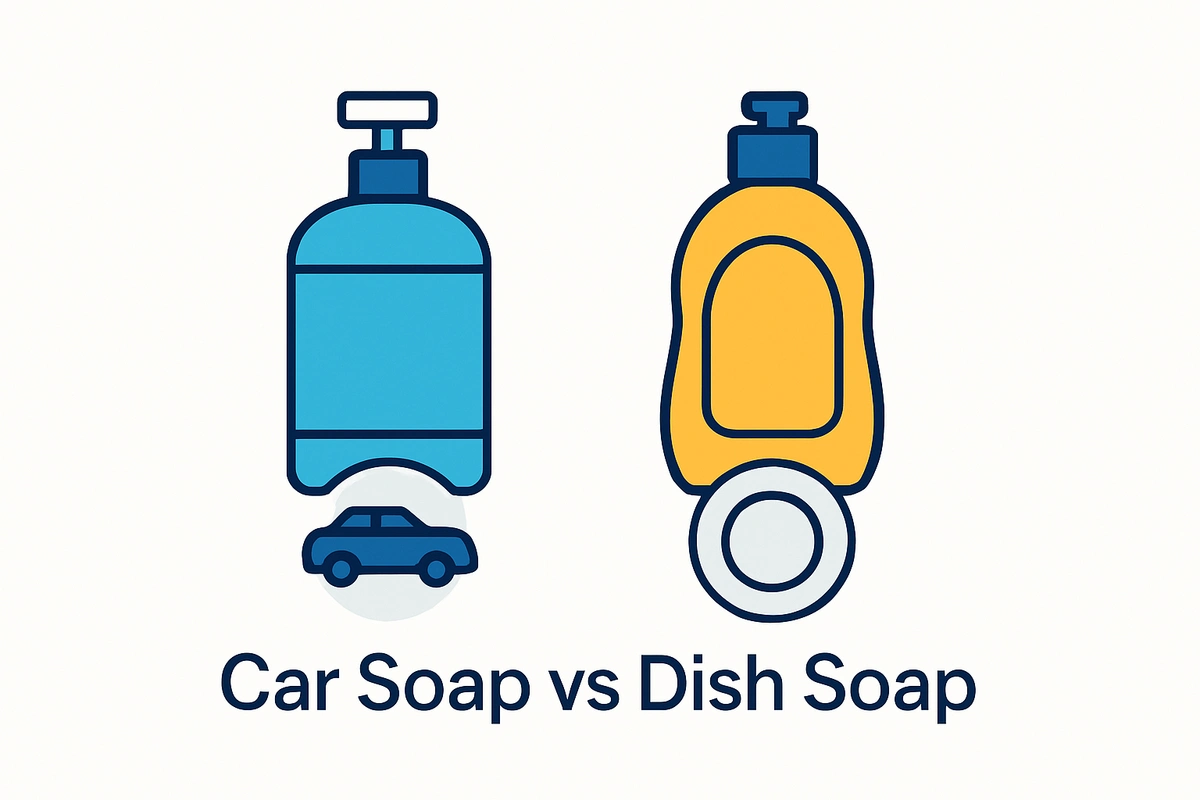
The most important difference between dedicated car shampoo and the detergents under your sink isn't the suds. It's lubrication. Good car soap contains water-soluble lubricants and surfactants, and often surface-conditioning agents. They let the wash mitt glide over paint and lift grit away so it rinses off instead of dragging across the surface. Kitchen dish soap lacks those lubricants, which raises the chance of fine scratches and swirl marks with every pass over dirt (Kelley Blue Book).
Here's how much that matters: plain water alone is abrasive. Rubbing a car with water only grinds dirt into the paint because grit has nothing floating it away from the surface (Detailed Image). A proper car soap turns that rubbing into a glide. This is why detailers foam a car first—not for looks. A foam cannon or foam gun provides dwell time, letting the soap soak and loosen the bond between grime and paint so less scrubbing is needed.
The second difference is pH and what the soap does to wax. Car wash soaps are pH-neutral or balanced to protect the finish, while dish soap is usually alkaline, higher on the pH scale so it cuts grease. That grease-cutting power's the problem on a car because it doesn't stop at dirt. Household detergents contain chemicals that break down paint finish and strip wax with enough use (CleanTools). A dedicated shampoo removes typical road dirt and grime without stripping the wax and protective coating, and some leave behind a thin film as extra defense when rinsed. Car soap cleans and preserves at once; kitchen detergent cleans aggressively and takes protection along the way.
The Dish Soap Question, Answered Honestly
This argument online never ends. So here's the honest version instead of either extreme. Can you use dish soap to wash your car? Yes, occasionally. Nonabrasive dish soaps are safe infrequently, and they're genuinely useful in one specific situation. Not all dish soaps are abrasive; some manufacturers advertise that their liquid soaps contain no harsh abrasives. The people saying dish soap will instantly destroy paint are overstating it.
But the people saying it's a perfectly good everyday choice are wrong. Repeated use degrades the clear coat prematurely, which leaves paint dull and vulnerable. It removes more than contamination; it strips any wax or sealant you've applied and leaves paint unprotected. Higher pH doesn't just cut grease; consistent use can promote oxidation and dry out plastic and rubber trim. Its alkalinity also makes it harder to rinse cleanly. Add the missing lubrication, and every wash carries slightly higher risk of fine marring.
So the accurate answer: dish soap is a soap substitute for a pinch or a specific job, not a replacement. Even detailers who otherwise avoid it acknowledge one legitimate use: stripping paint on purpose. If you're about to polish or re-wax and want to remove all old wax and sealant first, starting fresh on a clean, unprotected surface, dish soap's stripping power becomes a feature. Otherwise, if you use it, use it rarely and re-apply wax afterward because it will be gone.
One practical caution. Don't confuse liquid dish soap with dish detergent. They're very different. Detergent often comes as powder meant to dissolve in hot water; since a car wash uses cold water, undissolved particles risk scratching paint.
What About the "Dawn Myth"?
A huge amount of search traffic on this is specifically about Dawn, treated as either a miracle or a menace. The reality is unremarkable and matches everything above. Nonabrasive liquid dish soap is fine on rare occasions and excellent for deliberate wax-stripping. Repeated use carries the same clear-coat, oxidation, and wax-removal downsides as any dish soap. Nothing magical about it either way. If you see a video claiming it's the only soap you'll ever need, treat it as the exaggeration it is. If you see one claiming a single wash will wreck your car, treat it as the opposite exaggeration.
What You Can Actually Use, From Safest to Riskiest
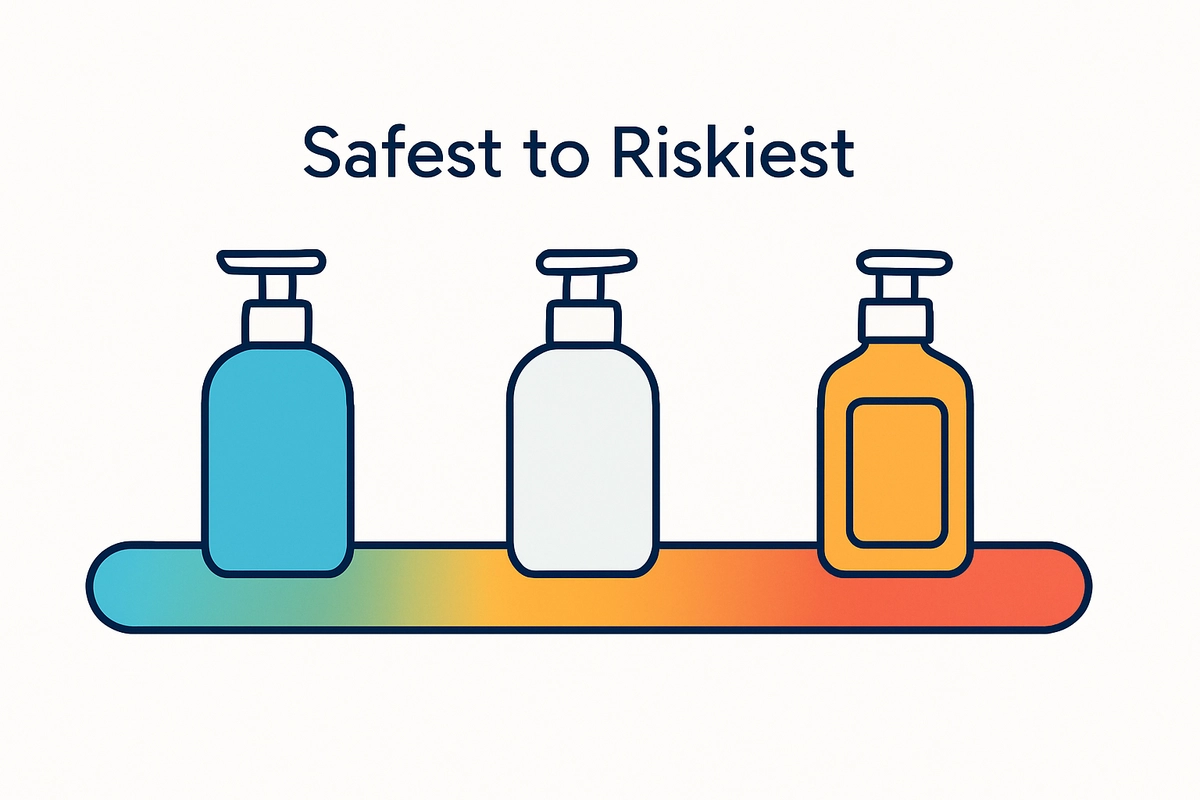
Out of car shampoo and wondering what's safe? Here's the honest ranking, safest first.
Baby shampoo, pet shampoo, and kids' shampoo. These are the best household substitutes. They're gentler than liquid dish soap and won't strip wax or paint protection. Shampoo for babies and children is especially mild because it's made for sensitive skin, which means it's much less likely to strip your paint, though it won't be as effective on heavy, ground-in dirt (Shine Armor). Kids' shampoo also works well for organic mess like bird droppings.
Regular hair shampoo. Ordinary hair shampoo isn't that different from car shampoo in many ways, and like all hair shampoo meant to be gentle on scalp, it tends to be kinder to bodywork than dish soap. It's a sensible fallback.
Body wash. Like shampoo, body wash is typically free of abrasive detergents and closer to pH-neutral, so unless you use it repeatedly it won't strip paint or wax. The catch: it lacks the lubricating agents real car soap has, so dilute it well and wash very gently.
Hand soap. It'll work if you have nothing else, though it's less effective than car shampoo and most containers don't hold much. Foamy hand soap beats runny because foam can work underneath dirt and lift it to rinse away.
Nonabrasive dish soap. As covered above, fine for occasional washes or deliberate wax strips, not for regular use. It's this low precisely because of the wax-stripping and pH downsides.
One rule across everything above: dilute it well and be gentle. No matter which substitute you use, dilute appropriately, because undiluted can cause excessive suds and harm the finish. Always reach for a soft microfiber cloth or mitt, not rough alternatives.
What to Leave in the Cupboard
Some household products aren't "less ideal." They're genuinely bad news on paint. Avoid these.
Laundry detergent. It's a heavy soap that's difficult to rinse and often contains aggressive agents like bleach and sometimes dyes—none of which your car will appreciate. If you absolutely must use it, only a mild one, heavily diluted in a big bucket, and even then it's a last resort.
Household and all-purpose cleaners. Kitchen and bathroom cleaners, glass cleaner, all-purpose sprays typically have much harsher chemistry than any soap. Risk of stripping paint is high, so keep them away from your car's exterior.
Bleach. Using bleach on a car causes irreversible damage. It can fade and discolor paint and cause rusting on metal parts.
Acidic and abrasive cleaners. Steer clear of both. Abrasive cleaners scratch, and acidic cleaners eat away at metal and cause discoloration.
Window or glass cleaner on paint. This one surprises people. Glass cleaner is alcohol, vinegar, and other solvents—superb on glass but wrong for paint. It's less viscous than water, which actually raises the risk of scratching with any grit present. Keep it for the windows.
Homemade Car Wash Soap, and the Recipe Nobody Explains
"Homemade car wash soap" is one of the most searched versions of this question, usually paired with worry: which recipe actually cleans without stripping my wax? Most articles dodge that point. Here's the direct answer.
The safest homemade "recipe" is barely a recipe: a small amount of pH-neutral, non-stripping cleaner like baby or pet shampoo mixed into a bucket of water. That combination cleans while leaving wax and sealant intact, because those shampoos don't strip paint protection like dish soap does. Want an eco option? Castile soap made from natural ingredients is biodegradable and a common base for DIY car wash mixes.
A few popular homemade ingredients deserve caveats. White vinegar mixed with water helps break down dirt and grime, but its strong odor and tendency to strip wax make it a poor choice as main body-wash soap. Where vinegar-and-water genuinely earns its place is glass: equal parts vinegar and water in a spray bottle makes an effective window cleaner, though vinegar alone can streak, which is why cutting it with water helps. Baking soda isn't body soap either, but a paste of baking soda and a little water works as a useful spot treatment for stubborn stains and bugs,. Apply the paste, let it sit a couple minutes, work it off gently with a soft brush in circular motions and let dry. So the honest takeaway on homemade mixes: use a gentle shampoo or castile base for the body, save vinegar for glass, baking soda for spot stains rather than the whole car.
How Much Soap? Getting the Dilution Right
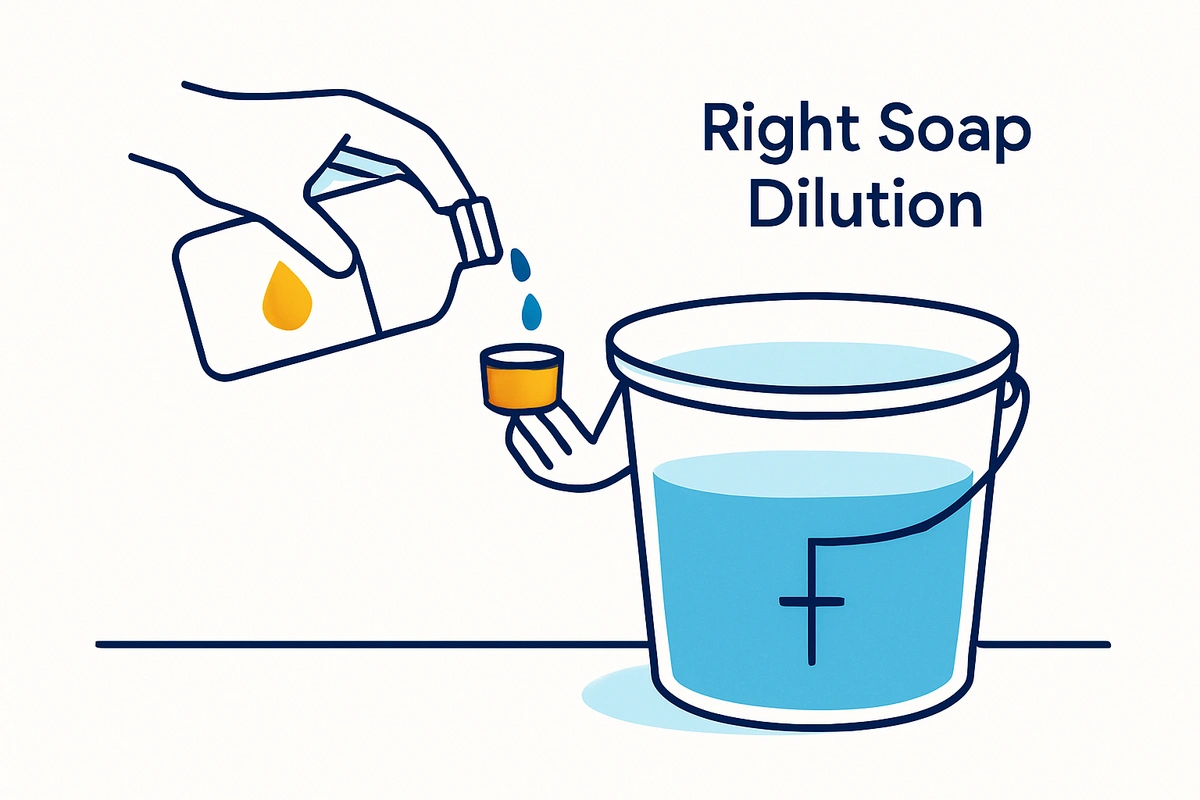
Dilution is where a lot of home washes fail—too strong and residue remains, too weak and nothing happens. There's no single universal number because it depends on the product and how dirty the car is, but a couple reference points help. For gentle substitutes, a workable guide is about one ounce of baby or pet shampoo per gallon of water. Dedicated car soaps vary more; a typical concentrated shampoo might call for anywhere from one to five fluid ounces per gallon depending on how much cleaning power you want. The practical rule: lean toward the weaker end for light maintenance wash and reserve the stronger mix for a genuinely filthy car. Whatever you use, rinse thoroughly afterward so no residue dulls the finish over time.
Do "Wash and Wax" Soaps Replace Waxing?
A lot of shelves are full of two-in-one soaps that promise to wash and wax in a single step. Fair to wonder whether one of those means never waxing separately. Short answer: no. These soaps include "wax," but they don't provide the same protection as dedicated wax, so if you plan to apply wax or sealant afterward, wash with a standard soap first. In fact, plain regular car soap is the go-to for detailers and professionals precisely because it leaves no additives behind, letting them apply wax or coating of their choice on a clean surface, and that's nearly always better protection than whatever's bundled into a fancier soap. None of that means a wash-and-wax product is bad. Short on time and just want a quick shine with water-beading? A soap with wax in it is perfectly solid. Just don't treat it as a substitute for real paint protection.
Choosing gentle soap protects paint from chemicals, but most fine swirl marks people blame on soap actually come from technique. Soap and method work together. Here's how to wash safely with whatever you've chosen.
The Soap Is Only Half the Job: How to Wash Without Adding Scratches
-
1
Rinse the whole car first
Start by rinsing the whole car thoroughly with a hose before touching it with a mitt. This carries off loose dirt, grime, and debris that would otherwise grind into paint.
-
2
Use the two-bucket method
One bucket with clean, soapy water and a second with plain water for rinsing the mitt after each panel. This keeps trapped grit out of your wash solution.
-
3
Use the right tool and work top to bottom
Reach for a soft microfiber mitt or cloth, not a sponge or bath towel. Those are too rough and drag dirt around instead of lifting it, and a microfiber mitt grabs grit and holds it away from paint. Work methodically from top downward, section by section, so dirty runoff falls onto panels you haven't cleaned yet rather than re-contaminating finished ones.
-
4
Let the soap dwell, then dry thoroughly
Grime is held by a bond to paint; patience beats force. Let the soap dwell to loosen that bond, and wash a spot gently twice rather than grinding at it once. That does far less damage than scrubbing hard to remove everything in a single aggressive pass. Finally, dry the car thoroughly with a clean microfiber towel. Don't let it air dry because standing moisture leads to spotting and rust over time.
If you own a foam cannon or foam gun, this is where the right soap pays off. Foaming the car first extends dwell time so soap softens and loosens grime before your mitt touches it, which means less rubbing and less risk. If you're using a substitute in a foam cannon, a soap that foams well and rinses cleanly matters more than usual.
Washing in the Heat and Hard Water of Kuwait
Everything above is universal, but Kuwait's climate adds practical wrinkles. The biggest is heat and sun. On a hot panel in direct sun, soapy water evaporates fast, and soap that dries on paint before you rinse it leaves film and streaks. That's doubly true for higher-pH dish soap that's already harder to rinse cleanly. The sensible move: wash in shade or cooler parts of the day, work one section at a time so soap doesn't sit too long, keep the car wet until you rinse. Because thorough rinsing and immediate drying stop residue and spotting, and standing moisture invites rust, drying the car promptly and completely is even more important here,.
Hard tap water compounds this. Mineral-heavy water left to dry on paint in strong sun creates the chalky spots common in the region, another argument for drying by hand rather than letting the car dry itself. And given how much fine dust settles on cars here, that pre-rinse step is not optional; flushing grit off before you wipe is the easiest way to avoid dragging it across paint. If your car is regularly exposed to salty coastal air, that's one more reason to keep laundry detergents and salt- or bleach-bearing products away from it. Salt exposure and cars don't mix. These are practical adjustments, not different rules; the gentle-soap, gentle-technique principles hold everywhere. The heat and dust just punish mistakes faster.
A Quick Word on Bird Droppings and Spot Emergencies
You don't always need a full wash. Bird droppings are acidic enough to be caustic to paint and should be removed quickly rather than left to bake on. A baby wipe is a handy way to lift an isolated spot in the moment; wipe only the affected area, then give the whole car a proper wash with car shampoo as soon as you can. For organic mess more generally, a mild kids' shampoo does the job without risking the finish.
The Short Version
The bottom line
A dedicated, pH-neutral car wash soap is worth using because it cleans while lubricating grit away and leaving wax intact,. Caught without it? A gentle shampoo, baby or pet shampoo, or body wash, well diluted and applied softly, is genuinely safe,. Nonabrasive dish soap is fine once in a while and useful for stripping old wax on purpose, but it's not an everyday soap because it strips protection and dulls the clear coat with frequent use. Laundry detergent, household and glass cleaners, anything with bleach or acid belongs nowhere near your paint,,. And whatever soap ends up in your bucket—good pre-rinse, two buckets, soft mitt, gentle touch, thorough dry—that technique is what actually keeps your paint swirl-free.
If sourcing the right products, mixing them correctly, and getting the technique right in Kuwait's heat sounds like too much, that's exactly what mobile services handle. Master Wash brings a proper, paint-safe wash to wherever your car is parked, so the right soap and the right method come to you. Whether you handle it yourself with the guidance above or leave it to us, the goal is the same: a genuinely clean car with its finish protected, not quietly worn away.