In this guide
- Why washing your car the right way matters
- What you actually need
- The right conditions: shade, timing, and the heat problem
- Step by step: how to wash a car by hand
- Should you use a pressure washer, and at what setting?
- Washing with little or no water: apartments, self-service bays, and waterless methods
- The hard-water problem and water spots
- Special cases: ceramic coatings, matte finishes, and dark paint
- Dealing with stubborn dirt: droppings, sap, tar, and bugs
- How often should you wash your car?
- Hand wash versus the automatic car wash
- A realistic plan for Kuwait
How to Wash a Car Properly: A Step-by-Step Guide for Kuwait's Heat and Dust
Search "how to wash a car" and you drown in contradictions. One guide swears by a foam cannon. The next says never touch your paint at all. A third has you scrubbing for nine hours with horse-hair brushes. If you simply want a clean car without trading your weekend or quietly sanding swirl marks into the paint, the noise is exhausting. This guide cuts through it. It explains the small number of things that actually protect your paint, the handful of mistakes that quietly ruin it, and how to adapt all of it to the one variable most car-wash advice ignores: the heat, dust, and hard water of a Gulf climate like Kuwait's. By the end you'll know exactly what to do, what to skip, and why each step matters.
Why washing your car the right way matters
Washing isn't just cosmetic. Regular washing is one of the best ways to maintain a car's finish and to catch problems early, because the slow, close attention of a hand wash lets you spot rust, loosening trim, rock chips, or other damage before they spread (Consumer Reports). Beyond spotting damage, washing protects the car's value: dirt left on the body can eventually cause damage to the paintwork, so regular cleaning both restores shine and helps preserve the car (Kärcher). Hand washing also lets you control exactly which tools and products touch your car, and gives you the chance to find and touch up paint damage yourself (Lowe's).
The flip side is that washing is also where most paint damage happens. Every single time something touches your paint, there's a risk of scratching it as the dirt is dragged across the surface (Motor Authority). That single sentence is the key to everything below. Good technique isn't about elaborate products. It's about removing dirt without grinding it into the clear coat. Get that right and the rest is easy.
In Kuwait, that risk is amplified. Cars here pick up fine, abrasive dust and the residue of frequent dust storms, then bake under a sun that is brutal on both paint and patience. The dust is gritty, which makes the "don't grind it in" rule more important here than almost anywhere. None of this changes the fundamentals, but it does change how carefully and how often you need to apply them.
What you actually need
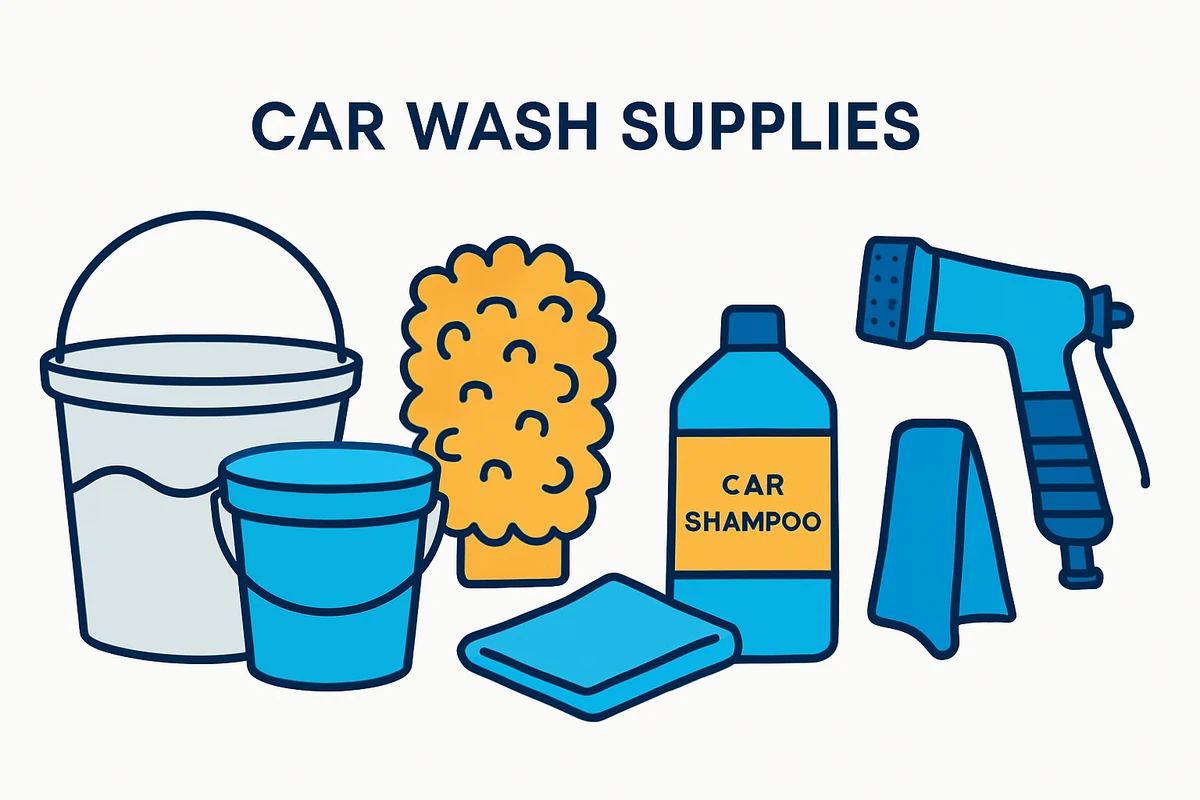
You don't need a garage full of detailing products. A workable kit is short:
Your wash kit
- Two buckets — one for clean, soapy water and one purely for rinsing the dirt out of your wash mitt
- A dedicated car-wash soap (not household cleaners)
- Something soft to wash with — a microfiber wash mitt or a large, soft natural sponge or lambswool mitt
- Microfiber towels for drying
- A hose or pressure washer
- Separate sponge or brush for the wheels — never mix with your paint tools
- A grit guard for the bottom of the rinse bucket — traps dirt below the screen so it stays off your mitt
The two-bucket approach is worth singling out because it's the cheapest upgrade you can make to your results. You keep one bucket for clean, soapy water and a second bucket purely for rinsing the dirt out of your wash mitt, which keeps grit from getting mixed back into the wash water and dragged across your paint. Two five-gallon buckets do the job, and dropping a grit guard into the bottom of the rinse bucket traps the dirt below the screen so it stays off your mitt.
One small but real precaution before you start: take off your jewelry. Rings, watches, belt buckles, and bracelets are all hard objects that can scratch paint the moment you lean over a panel. It feels fussy until you see the fine arc of a watch-band scratch on a door.
What soap to use, and the dish-soap question
This is the most common beginner mistake, so here's a direct answer.
Don't wash your car with household cleaners like hand soap, dishwashing detergent, or glass cleaner. They're not formulated for automotive paint and can strip off the protective layer of wax that is doing real work on your finish. A dedicated car-wash product is milder and made for the job.
People still ask specifically about Dawn or other dish soaps because they're cheap and they cut grease. Here's the honest version: dish soap will clean the car, but it's a degreaser, and the same property that lifts grease off your plates strips wax off your paint. A purpose-made car soap is designed to clean without stripping wax or harming the paint (Chemical Guys). So a one-time emergency wash with dish soap won't destroy your car, but using it as your regular soap means re-waxing far more often and leaving the paint less protected in between. For a few extra fils per wash, a real car-wash soap is the better call. In a high-UV climate, keeping that wax layer intact matters more, not less.
For grease, rubber, and road-tar deposits that build up around the wheel wells and the lower edges of the body, ordinary soap may not be enough. These can need a stronger bug-and-tar remover and a soft, nonabrasive cloth, because they quickly blacken a sponge.
Sponge or microfiber cloth, which is safer?
Search results genuinely disagree here, so it's worth resolving plainly. The traditional advice is that a large, soft natural sponge or a lambswool mitt is fine for applying suds, and many step-by-step guides list a car-wash sponge as a standard tool. Detailers who obsess over swirl-free paint take a stricter line: nothing but microfiber should touch the paint. No bug sponges, no chamois.
Both can be right. A clean sponge with plenty of lubricating suds, rinsed often, won't wreck your paint. But a microfiber mitt is more forgiving because its fibers pull grit off the surface instead of pressing it flat against the clear coat. If you're washing a dark-colored car, where every swirl shows, lean microfiber and work in small sections, rinsing often. In dusty conditions, where there's simply more abrasive grit on the car, the microfiber argument gets stronger. The single most important factor isn't the material but whether the thing touching your paint is clean and well lubricated.
The right conditions: shade, timing, and the heat problem
When you wash matters as much as how. The rule everyone agrees on: don't wash your car in direct sun or when the body is hot. Heat speeds up the drying of soap and water, which makes washing harder and increases the chance that spots and mineral deposits will form on the paint. There's a second, less obvious reason from the detailing world: a water droplet sitting on hot paint in sunlight acts like a magnifying glass, concentrating the light and potentially damaging the finish. Many wash products simply perform better cool (Instructables). The ideal is shade on a mild day.
This is exactly where Kuwait's climate stops being a footnote and becomes the main event. There's a sourced threshold worth knowing: once it's over about 90°F (32°C), soap can dry before you've even finished a panel, leaving a patchy, streaky mess along with water spots and potential paint stress.
The recommended fix is to wash in the early morning or late evening instead. For much of the Kuwaiti year, midday sits far above that line. The practical takeaway is simple: in summer here, a midday driveway wash is fighting physics. Wash early in the morning before the heat builds, or after sunset when surfaces have cooled, and always work in shade if you can find it. The same heat that dries your soap is also the heat that bakes dirt and droppings into the paint, which is why timing isn't a nicety here but the difference between a clean car and a spotted one.
Heat also tightens your working window. The professional habit is to move quickly and efficiently so neither water nor soap dries on the paint, rinsing each panel as you go if needed to keep the car wet. In a hot climate that advice goes from helpful to essential: wash and rinse one small section completely before moving on, and don't let any panel sit covered in drying suds. Cold extremes matter elsewhere, but for the Gulf the relevant warning is all on the hot end of the scale.
Step by step: how to wash a car by hand
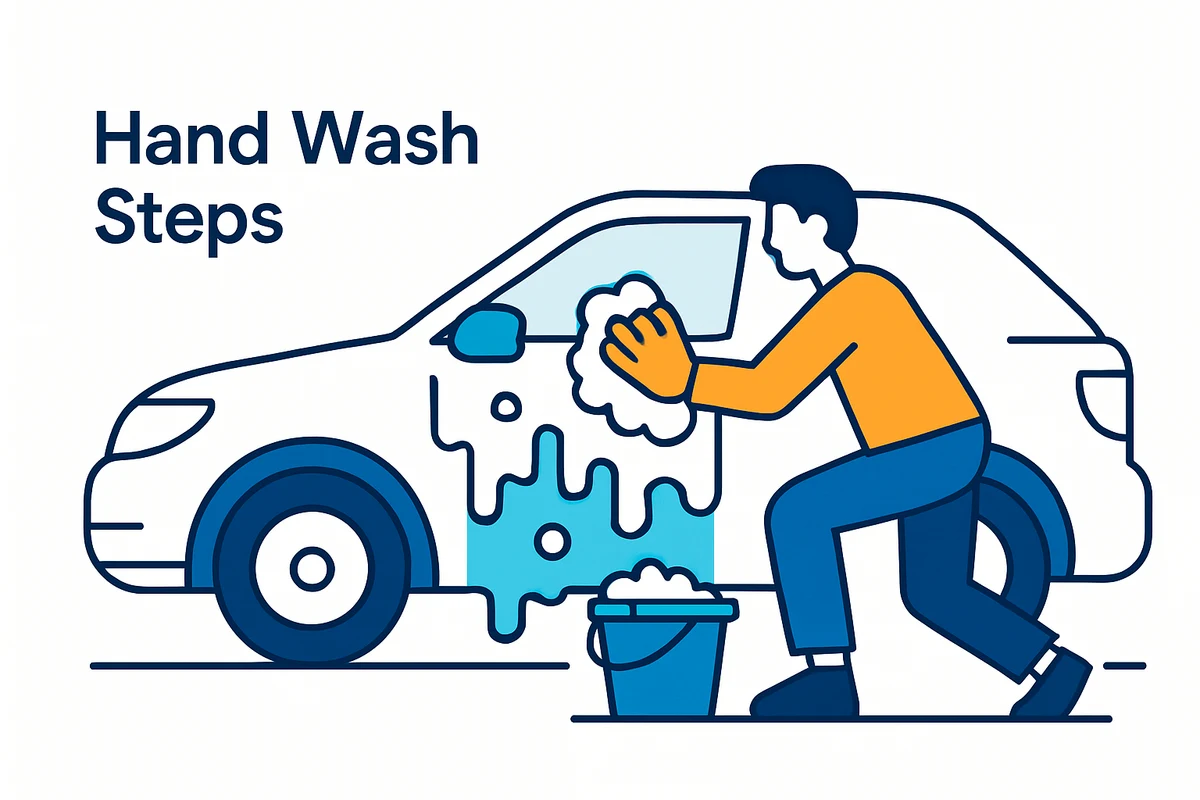
The sequence below is the consensus method, assembled from how the most reliable guides actually order the work. The logic is always the same: work so that dirt moves away from clean areas, never back onto them.
-
1
Pre-rinse to remove loose dirt
Before anything touches the paint, rinse the whole car thoroughly with water to float off loose dirt and debris that would otherwise scratch the finish once you start washing. Start at the roof and work downward, and don't rush the dirtiest zones. Give extra attention to the wheel wells and the lower body, where grime collects,. In dusty conditions this pre-rinse is the step that earns its keep: the more abrasive grit you can flush off with water alone, the less there is to drag around later. If your car is merely dusty rather than genuinely dirty, this rinse already does most of the work.
-
2
Wash the wheels first
Wheels are the dirtiest part of the car, coated in brake dust and road grit, so clean them first and keep their tools separate from everything else. Use a separate sponge or brush and, if needed, a dedicated wheel cleaner, because the sand and brake dust on wheels could otherwise mar the car's finish. Doing wheels first also means the grime you knock loose doesn't splash onto a body you've already cleaned. Wash one wheel at a time, rinsing your brush between wheels, and when you finish dump the dirty rinse water and refill with clean water before you move to the paint,.
One reassuring note on the tires themselves: you don't need a tire-shine product. Plain soap and water is all the tires need, and the glossy dressings sold for sidewalls are essentially cosmetic.
-
3
Wash the body, top to bottom
Now wash the paint using your soapy mitt, working from the top of the car downward. Start with the roof, then glass, then hood, then down the sides. Gravity carries dirt down and a car is always dirtiest in the lower third where the wheels kick grime up onto it. Working top-down means you're washing the cleanest areas while your mitt is cleanest and saving the filthiest panels for last.
Two technique rules prevent the most common self-inflicted damage. First, never move the mitt in circles. Circular motion creates light but very visible scratches called swirl marks. Instead move straight across the panel, lengthwise, or in a Z-pattern,. Second, don't let soap dry on the paint. Concentrate on one section at a time, washing and rinsing each area completely before moving to the next so the soap never has time to dry. This second rule is the one Kuwait's heat punishes hardest, so keep your sections small.
This is where the two-bucket method does its work. After each panel, dunk the mitt in the rinse bucket and agitate it against the grit guard to release the dirt, wring it out, then reload it from the soapy bucket before the next panel,. Work the soap into a thick lather, because the suds provide lubrication that lets the mitt glide instead of grinding. And if your mitt, sponge, or cloth ever falls on the ground, don't keep using it without thoroughly rinsing it out. A dropped mitt picks up dirt particles that will scratch the paint.
-
4
Final rinse
Once the whole car is washed, rinse it thoroughly from top to bottom and make sure every trace of soap is gone, paying attention to the tight spots and seams where suds like to hide. On a polished finish there's a clever trick: rinse using a hose with no nozzle and let the water sheet over the car from top to bottom. This sheeting action helps carry the soap off and reduces water pooling, which makes drying faster and easier.
-
5
Dry it properly — this is not optional
Drying is where a good wash is often quietly undone. Don't let the car air dry. Air drying leaves watermarks caused by the minerals in hard water, and you should also avoid any abrasive towel that can leave hairline scratches. Leaving droplets to sit also raises the chance of spotting and of damage to the paint while it's unprotected.
For the actual drying, you have a few good options. A chamois (natural or synthetic) or soft terry towels work well, and it's best to blot the water up rather than drag the towel across the paint. Many detailers prefer a two-microfiber method: one towel to soak up the bulk of the water, then a second to buff away the last of it for a streak-free, spot-free finish. The fastest approach is forced air. A leaf blower set on low quickly removes most of the water, ideally a light-duty battery-powered one to avoid electrical issues around water.
Whatever method you use, get the hidden water too. Badges, door sills, gaskets, grilles, spoilers, and trim all hold water that later drips out and leaves etched spots on the paint long after you've finished, so a handheld blower or compressed air is the easiest way to clear those crevices,. In a hard-water region this step is doubly important, which we'll come back to.
-
6
Glass, and a quick inspection
Finish the glass with an ammonia-free window cleaner and a clean microfiber cloth on the windshield, windows, and mirrors. If you're using paper towel in a pinch, use a good one. Cheap paper towel leaves lint behind. Then walk around the car and check it from different angles under the light to catch any spots you missed, and re-wash as needed,.
One sequencing note if you're also cleaning inside the car: wash the exterior first, so you don't track outside dirt into a freshly cleaned interior.
Should you use a pressure washer, and at what setting?
A light-duty pressure washer can be a great tool, but two things determine whether it helps or harms: the nozzle and the distance. The nozzle is where people go wrong. Don't use a narrow 0-degree tip. That concentrated jet can damage paint. A wide-angle nozzle around 40 degrees gives you cleaning power without the risk. The same idea in pressure-washer terms is to use the flat-jet nozzle and never the rotor (turbo) nozzle on car paint.
Distance matters just as much as the tip. Keep the nozzle at least 15 centimeters from the car's surface, and at least 30 centimeters from the tires. Work from the bottom up when you're applying cleaner so you can see which areas you've already covered, then rinse. And before you reach for one at all, check both your car's manual and the pressure washer's manual, and use only the pressure settings, nozzles, and detergent they specify.
On the recurring question of exact PSI: the honest answer is that the safe target is defined by tip angle and distance, not a single magic number. The manufacturer of your specific car and washer has the final say. A wide nozzle held at a safe distance is gentle even at a fairly high rated pressure, while a narrow tip held close can mar paint at a much lower one. Get the angle and distance right and the pressure looks after itself.
Washing with little or no water: apartments, self-service bays, and waterless methods
A lot of people searching how to wash a car don't have a driveway and an outdoor tap. This is especially common in apartment-heavy cities, and it has practical answers rather than dead ends.
If you have no running water available, a genuine waterless or rinseless approach works. Hand frothers paired with a hoseless wash solution let you safely wash the exterior without a hose, and slick spray detailers can serve as a lubricant with microfiber towels for a car that is only lightly dusty. The critical caveat is that these methods are for light dirt and dust, not for a genuinely filthy car. If the car is merely dusty, you can use the hoseless solution as the wash itself, wipe it off with a clean microfiber towel, and go straight to drying and protection. For a car caked in mud or heavy grime, never dry-wipe it. You'd be sanding it with its own dirt. That car needs a proper rinse first.
This light-versus-heavy distinction is genuinely useful in a dusty climate. Much of what lands on a car between washes here is fine dust rather than mud, and for that, a rinseless or spray-detailer wipe-down between full washes can keep the car presentable without a full setup. Save the two-bucket wash for when the grit has really built up.
Self-service "pay-and-spray" bays, where you feed coins into a high-pressure gun, are a reasonable middle path when you have no space of your own to wash at home. The two cautions are physical: take care not to blast off fragile trim, and don't let the metal nozzle bump into the paint.
The hard-water problem and water spots
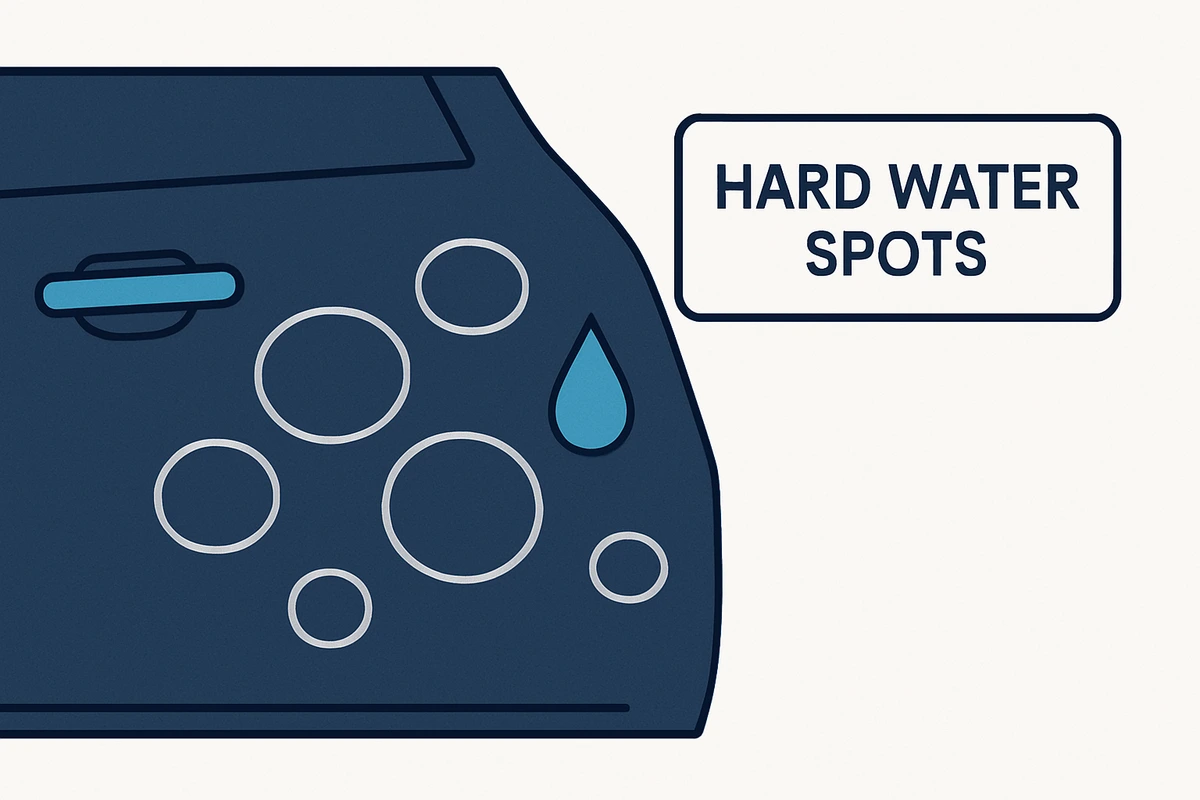
Water spots are the most frustrating way to ruin an otherwise good wash, and they're a particular issue anywhere the tap water is hard. The mechanism is simple: when mineral-rich water dries on the paint, the minerals are left behind as visible deposits, which is exactly why air drying leaves watermarks. On hot paint the problem compounds, because hard water that dries before you can remove it can actually etch the surface.
There are two practical defenses. The first is drying promptly and completely, including the hidden water in trim and badges that drips out later, as covered above. The second, if you want to chase a truly spotless finish, is to use deionized water for the final rinse: because it's free of minerals, it dries without leaving spots, so you barely need to towel-dry at all. For most people, fast and thorough drying is enough. But if you live somewhere with notably hard tap water and you keep fighting spots no matter how careful you are, a deionized final rinse is the upgrade that solves it. In Gulf cities where much of the supply originates from desalination and mineral content can be high, this is worth keeping in mind. It pairs naturally with the early-morning, out-of-the-sun timing that already gives you more time to dry before water can flash off.
Special cases: ceramic coatings, matte finishes, and dark paint
If your car has a ceramic coating, you can absolutely still wash it normally. But the soap matters. Ditch harsh soaps and use a pH-neutral product with soft microfiber mitts, being gentle rather than scrubbing hard, because the wrong soap can degrade the coating. On the related question of what destroys a ceramic coating: the consistent theme is harsh soaps and abrasive contact, which is why pH-neutral soap and soft microfiber are the standing recommendation. And no, you shouldn't rely on rinsing a coated car with just water and calling it clean. Water alone won't lift bonded grime, and a proper pH-neutral wash is still the way to maintain the coating.
Matte and satin finishes need their own soaps, formulated not to add gloss, and you should avoid any polishing or rubbing that would disturb the flat look. Use gentle, even strokes only. Dark and black cars are the hardest to keep swirl-free because every imperfection shows, so use high-quality soft microfiber mitts, work in small sections, and rinse often. In a dusty environment, dark cars are doubly demanding, which is the strongest possible argument for the careful pre-rinse and the two-bucket method on those vehicles.
Dealing with stubborn dirt: droppings, sap, tar, and bugs
Some contaminants do real damage if you leave them, and the Gulf's heat speeds that up. Bird droppings can damage paint, especially in summer, so don't wait to remove them. Crucially, never rub a dried dropping off, because that grinds it across the paint and scratches it. Soak the spot with lukewarm water first, then wipe it away gently. The same patient, soak-first principle applies to insect residue, which lifts off easily after being softened with a wet paper towel for around 15 minutes.
Tree sap rewards speed: the fresher it is, the easier it comes off with warm water and a sponge. Once dried, a dab of cooking oil or grease left for a few minutes lets you wipe it away. Road tar is the stubborn one and is best handled with a dedicated bug-and-tar remover and a soft cloth rather than abrasion. The thread running through all of these is the same: soften first, never scrub dried-on contaminants, and deal with them quickly, because heat bakes them in.
How often should you wash your car?
For typical use, roughly every two weeks is a sensible baseline, adjusted up if conditions are harsh. A bi-weekly to monthly rhythm is the commonly cited range, varying with location, weather, and how you drive. As a floor, aim for at least once a month, and more often if you drive a lot or the car gets dirty quickly. A useful way to split it: every two weeks if you drive frequently or in harsh conditions like salty or dusty roads, every four weeks for milder use.
For Kuwait, the "harsh conditions" caveat is the operative one. Frequent dust and the residue of dust storms mean cars here sit closer to the every-two-weeks end of that range, and a light rinseless wipe-down in between keeps abrasive dust from accumulating. Whatever your interval, treat contaminants like droppings and sap as exceptions to the schedule. Clean those off the moment you notice them rather than waiting for the next wash.
Hand wash versus the automatic car wash
If you have the time and a place to do it, a careful hand wash is gentler than most automatic options. Automated washes are quick and convenient, but their motorized brushes can damage paint by grinding in grime carried from the cars before yours, or by catching on loose trim.
Hand wash vs. automatic car wash
Hand wash
- Gentler on paint than most automatic options
- You control exactly which tools and products touch your car
- Lets you spot rust, loosening trim, and rock chips before they spread
- Far superior to an automated touch wash — no dirt-laden brushes from previous cars
- More thorough than a one-size-fits-all automatic wash
Automatic car wash
- Motorized brushes can damage paint by grinding in grime from previous cars
- Brushes can catch on loose trim
- Paint gets scratched and swirled by dirt left on the brushes from the previous line of vehicles
- Won't get a deep, thorough clean the way doing it yourself can
- Touchless type is safest for paint but may not get the car as clean as you'd like
The catch is honesty about your own situation: not every driver has convenient access to water, shade, or the time to do this properly. In a climate where the only safe windows are early morning and after sunset, and where many people have no driveway or outdoor tap, "just hand wash it yourself" isn't always realistic. That's precisely the gap a professional hand wash that comes to you is meant to fill.
A realistic plan for Kuwait
Pulling it together, here's what good car washing looks like in this climate. Wash early in the morning or after sunset, never under the midday sun, and always in shade where you can find it, because anything above roughly 90°F (32°C) dries your soap before you finish and invites water spots. Pre-rinse thoroughly to flush off abrasive dust before anything touches the paint. Use a real car-wash soap, the two-bucket method, and a soft microfiber mitt, working top to bottom in straight lines and small sections so soap never dries on a panel. Dry promptly and completely, hidden water included, to beat hard-water spotting. If spots keep winning, consider a deionized final rinse. Between full washes, a rinseless wipe-down keeps fine dust from building up. Deal with droppings, sap, and bugs the moment you see them, soaking rather than scrubbing.
None of it is complicated. It's a handful of habits aimed at one goal: lifting dirt off the paint instead of grinding it in, in a climate that gives you a short, cool window to do it.
The bottom line
If your schedule, your parking situation, or the summer heat makes a careful hand wash hard to pull off, that's exactly where a mobile car wash earns its place. Master Wash brings the proper two-bucket, paint-safe hand wash to wherever your car is parked (home or office) and does it at the cooler, paint-friendly times of day, so your car gets the careful treatment described here without you having to fight the sun, the dust, or the lack of a tap. When doing it right yourself isn't practical, let us bring the right way to you.