In this guide
- Why clean glass matters more than it looks
- Why car glass gets dirty the way it does
- The tools that actually work (and the ones that sabotage you)
- The inside of the windshield: degrease, don't just wipe
- Removing tree sap and other stubborn spots
- The fog problem: why it happens and how to clear it fast
- Adapting all of this to Kuwait's climate
- How often, and when it's worth handing off
You wipe the glass, step back, and it looks perfect. Then you pull out of the driveway, the sun drops to eye level, and there they are: long smears and a milky haze stretched right across your line of sight, worse now than before you started. Or it's the inside of the windshield, where a thin greasy film keeps coming back no matter how many times you attack it with a paper towel. Or it's a hard bead of tree sap you can catch with a fingernail, sitting dead centre in your view. Search for a fix and you'll find contradictions everywhere: one page swears by dish soap, the next says it'll wreck your glass, a third tells you to spray the whole windshield with WD-40, and a video insists newspaper is the only real answer.
Clean glass isn't a cosmetic detail. It's the single surface you look through every second you drive, and a dirty or streaked windshield scatters light exactly when you can least afford it. This guide cuts through the noise. It explains why car glass gets dirty in the specific ways it does, which tools and cleaners actually leave it clear, the method that gets both sides streak-free, the popular shortcuts that quietly make things worse, and how to handle the two problems that send most people looking for answers: stubborn film and fog. It also adapts all of it to the one thing most window-cleaning advice ignores: the heat, dust, and glare of a climate like Kuwait's. By the end you'll know exactly what to do, what to skip, and why each step matters.
Why clean glass matters more than it looks
It's tempting to treat window cleaning as the last, optional step of a wash, the thing you do if you have five minutes left over. It's not. Dirt and grime on the glass pull your focus away from the traffic around you, and streaks and contaminants refract light, which doubles the distraction rather than simply adding to it, according to AutoZone. That refraction is why a windshield that looks merely "a bit hazy" in a shaded car park turns into a wall of glare the moment you point it at the sun or a set of oncoming headlights.
The safety case is straightforward. Sunlight or headlights shining through a dirty windscreen can produce a hazy or glaring effect that impairs your sight, and scratches, abrasions, and chips on the outside make that dazzle from the sun worse still, notes The AA. A clean, streak-free windshield is a safety essential precisely because dirty glass interferes with visibility at night and in harsh light, as Chemical Guys puts it. In other words, the times you most need to see clearly—low sun and night driving—are the exact times dirty glass fails you.
There's also a knock-on effect most people never connect. Streaks left on the glass can attract moisture, which makes the surface more prone to fogging and frosting up, and dirt on the glass also stops your wiper blades from working properly, per. So a windshield you never quite get clean isn't just harder to see through today; it fogs faster tomorrow and wears out your wipers along the way. Getting the glass genuinely clean solves three problems at once.
Why car glass gets dirty the way it does
To clean glass well you have to understand that the inside and the outside get dirty for completely different reasons. Treat them the same and you'll always leave one of them streaked.
The outside collects everything the road throws at it. Bugs, bird droppings, rail dust, pollen, sap, and ordinary grime build up mile after mile and slowly turn a crystal-clear windshield into a blurry one, asdescribes. Most of this is greasy or gritty rather than merely dusty, which is why a quick dry wipe just smears it around. The outside is also where wiper rubber drags contamination back and forth, and where washer fluid alone often isn't enough to lift what has bonded to the glass.
The inside is stranger, and it catches people out. Over time the plastics, vinyls, and other materials inside your cabin release chemicals into the air in a process called off-gassing, and those gases settle on the glass and leave the inside of the windscreen greasy, explains. This is the source of that stubborn, hazy film that seems to reappear from nowhere. You don't have to spill anything or touch the glass to create it; the car does it to itself. And it's not a smoker's problem, despite the myth. Even if you've never smoked in the car, a hazy film still builds up on the inside of the glass, which is why it needs cleaning regularly, per. If you've ever cleaned the inside of your windshield and watched the film creep back within days, off-gassing is why.
The practical takeaway is simple: the inside needs degreasing, not just wiping, and the outside needs the grit lifted off before anything touches it. The method below does both in the right order.
The tools that actually work (and the ones that sabotage you)
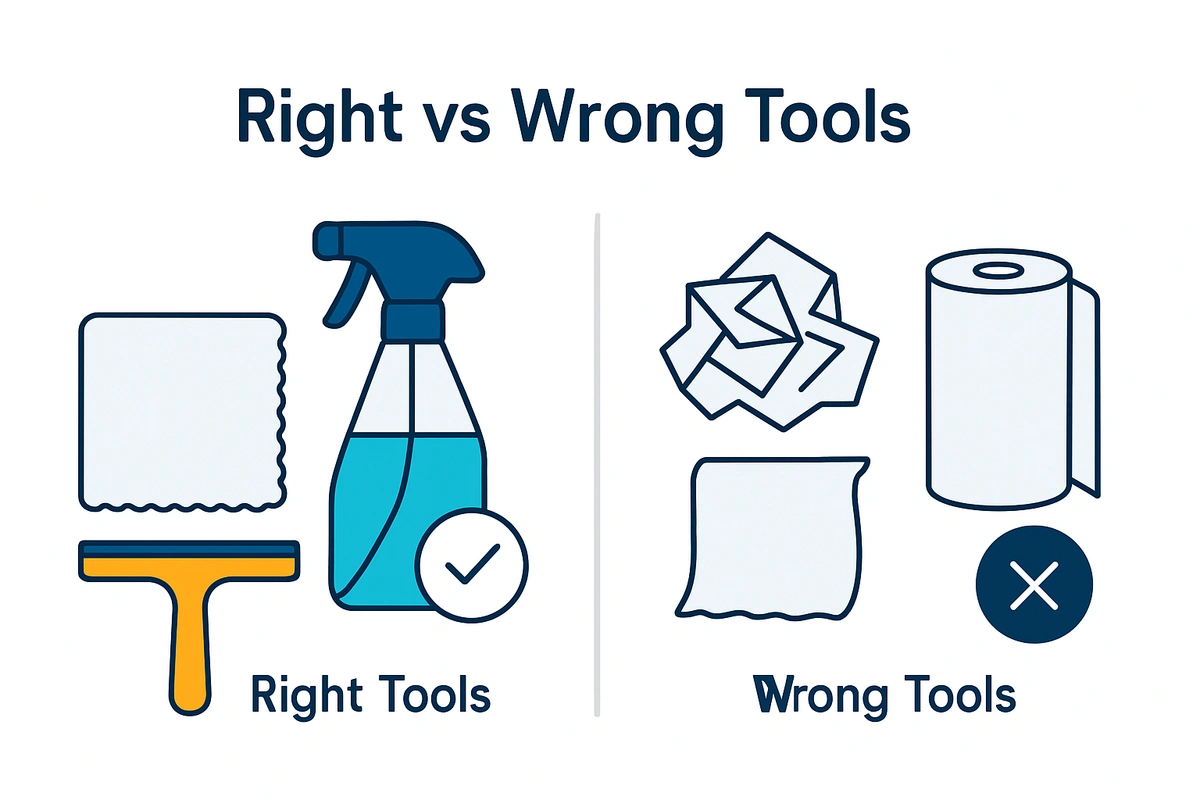
Most streaky-glass disasters are decided before you spray anything, by the cloth and cleaner you reach for.
Start with the cloth, because it matters more than people expect. Microfiber towels are the best option for cleaning car glass: they're highly absorbent and trap dirt and moisture well without scratching the surface, while paper towels tend to leave lint behind and are less effective at a streak-free finish, according to. Chemical Guys is blunter about the paper-towel habit, warning that paper towels are scratchy and leave fibers behind, and recommending waffle-weave microfiber towels instead, as noted by. Whatever you use, it must be genuinely clean and lint-free, because leftover particles or debris can create scratches and smudges that impair visibility, warns. One gritty towel can undo the entire job and leave marks you can't wipe out afterwards.
You also want more than one cloth.suggests keeping four microfiber towels on hand: two for the inside glass and two for the outside, using the first to remove the cleaner and the second to clear the residual "fog." The reasoning is the heart of streak-free work: one towel does the cleaning and a second does the buffing, which prevents you from spreading used product and dirt back across the glass, asexplains.
On cleaner, the advice converges. A dedicated automotive glass cleaner works best because it cuts through the oils and airborne particles that cause streaking, whereas multipurpose cleaners can leave a residue that causes the very streaks you're trying to avoid, per. Two specifics matter. First, use an alcohol-based glass cleaner and avoid ammonia-based cleaners, which can cause damage, advises. Second, if your windows are tinted, ammonia matters even more: an ammonia-free product is safe for tinted windows, per, and ammonia can eventually cause tint to rip or fade, warns Allstate. Since most cars carry at least some film or factory tint on side and rear glass, ammonia-free is the safe default.
What to have on hand
- Microfiber towels — not paper towels, which leave lint behind and are less effective at a streak-free finish
- Four towels: two for the inside glass and two for the outside — the first removes the cleaner, the second buffs away residual fog
- A dedicated automotive glass cleaner — not a multipurpose cleaner, which can leave a residue that causes the very streaks you're trying to avoid
- Alcohol-based formula — avoid ammonia-based cleaners, which can cause damage
- Ammonia-free product if your windows are tinted — ammonia can eventually cause tint to rip or fade
The method: outside first, inside second
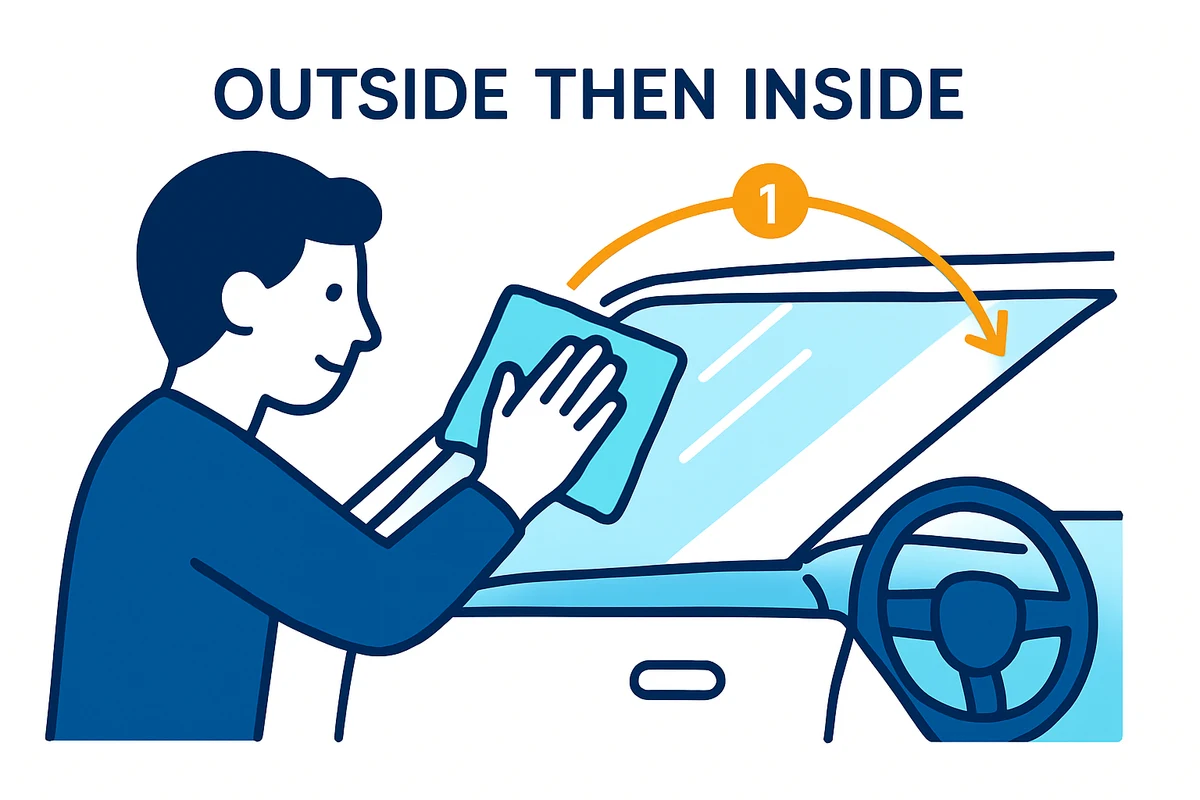
There's a logic to the order that saves you time and confusion. Clean the exterior glass first, get it as clean as possible, and then move to the interior, because once the outside is spotless you can look out through the inside glass and know that any remaining dirt and streaks are on the inside, asrecommends. Reverse the order and you'll chase a streak from one side to the other for ten minutes.
-
1
Prepare the glass
Before any cleaner touches the window, get the loose material off it. The best preparation for cleaning glass is to remove surface dirt first, ideally with a car wash using sudsy water, and then let the glass dry before you start, per. This step isn't optional in a dusty climate. Skipping it means you're dragging grit across the glass with your cloth, which is exactly how fine scratches appear. Lift the wiper blades away from the glass while you work on the outside so you can reach the full sweep of the windshield, and if the screen is very dirty, wash it first with water before cleaning, suggests. Some cars require a "wiper maintenance" mode rather than simply lifting the arms, so check the handbook if the wipers won't move freely. The single most important preparation step, especially where the sun is strong, is location: park in the shade. Direct sunlight causes the cleaner to evaporate too quickly, which contributes to streaks, according to.makes the same point in plainer terms: detailing under direct sunlight is a mistake because the heat makes cleaners evaporate too fast, leaving streaks behind. Early morning and late afternoon are ideal times to clean glass to avoid rapid evaporation from direct sunlight and the heat it generates, adds.
-
2
Apply the cleaner
More cleaner isn't better. Apply the cleaner evenly across the window and avoid over-saturating it, because excess liquid can drip onto other surfaces and leave marks, per. A light mist is usually enough: too little and you just smear dirt around, too much and the cleaner leaves its own residue. Let it sit for a few seconds so it can break down the dirt and grime before you wipe. There's one adjustment that depends on how hot the glass is, and it's the trick that separates clean glass from a streaky mess in warm weather. If the windshield is cool, you can spray the cleaner directly onto the glass; if it's warm, apply the cleaner to your towel instead, to stop it evaporating before you've wiped it, asadvises. Spraying onto the cloth rather than the glass has a second benefit on the inside: it keeps droplets off the dashboard, where glass cleaner can otherwise cause discoloration, notes Kia.
-
3
Wipe, then buff
Wiping is two actions, not one. First you lift the dirt and cleaner off, then you buff the glass dry and clear. Use a microfiber cloth and wipe in overlapping passes, either in circular motions, which works well for larger areas and the centre of the glass, or in a cross-hatched pattern where you go vertically and then horizontally, overlapping each pass, which works well in tighter areas and edges, per. Then, and this is the step people skip, take a second dry cloth and buff the window to remove any remaining residue. The glass often looks clean before this step, but the results are noticeably better after the second dry pass, according to.describes the same finish: after cleaning, buff the glass with a second clean microfibre cloth. Work in small sections rather than trying to do a whole windshield in one sweep. Clean one window at a time, break larger windows into smaller sections, and make sure each part is thoroughly cleaned and dried before moving on, asrecommends. A folding trick keeps your cloth working for you: fold the towel into thirds so you can turn to a fresh, clean side as each one loads up with dirt, which stops you smearing grime back onto the glass, per.
Here's the professional habit that ends the "is the streak inside or outside?" guessing game for good. Wipe the exterior glass in one direction and the interior glass in the other.recommends cleaning the outside in an up-and-down (vertical) motion and the inside in a side-to-side (horizontal) motion, precisely so that when a streak remains you can instantly tell which side it's on by which way it runs. A vertical streak is outside; a horizontal one is inside. It costs nothing and it turns a frustrating hunt into a two-second diagnosis. When you think you're done, inspect the glass from more than one angle before you put the cloths away. Look at it from different viewpoints and under different light, whether natural sunlight, garage lighting, or even your phone flashlight, because direct and indirect light reveal streaks you'd otherwise miss, assuggests. If streaks remain, re-apply a small amount of cleaner and wipe until it's dry, per.
The inside of the windshield: degrease, don't just wipe
The inside deserves its own routine because the film on it is greasy, not dusty, and a normal wipe just moves the grease around. A method that works reliably starts dry and finishes with cleaner. First, wipe the inside of the windshield with a dry microfiber cloth, which is less likely to leave anything behind on the glass, using a circular motion and then a vertical one. Next, degrease the glass—one option being a magic eraser placed in warm water to activate it and then wiped over the glass in circular motions, after which you should immediately dry the windshield with a fresh microfiber towel to avoid wet streaks and to lift the remaining grease. Finally, spray glass cleaner onto a microfiber cloth, not directly onto the glass, and wipe in circular motions and then vertically to finish. This full sequence is the method described by.
Two details make the inside easier. Spraying the cleaner onto the cloth rather than the glass keeps it off your hands and off the dashboard, asnotes for interior cleaning, and Kia adds the reason to avoid the dash directly: droplets from the cleaner can fall on the dashboard and cause discoloration, per. And the hardest part of the inside windshield to reach, the strip where the glass meets the dashboard, becomes manageable if you sit in the passenger seat instead of wrestling around the steering wheel, which gives you better reach and easier access, per. Kia describes a similar contortion: sit with your back facing the rear of the car so your backhand can reach the tightest spots along the base of the windshield, per.
Frequently asked questions
Search results for car glass are full of household hacks, and the honest answer is that some are fine, some are pointless, and a couple make things worse. Here's where each one really stands, based on what the sources say and where the popular advice quietly overreaches.
Does vinegar actually work for cleaning car windows?
This one genuinely works, with caveats. You can add a small amount of vinegar and methylated spirits to water to make an effective cleaning solution, where the vinegar cleans well and the alcohol makes the solution evaporate quickly to reduce smears, per.agrees vinegar is an effective home remedy for cleaning car windows, while noting that dedicated automotive products tend to yield better results. The catch, per The AA, is practical rather than chemical: both vinegar and methylated spirits smell unpleasant, the ratio is fiddly to get right, and once you factor in cost and preparation time you're no better off than with a proper glass cleaner. So vinegar is a legitimate backup if it's what you have, not a reason to avoid buying glass cleaner.
Is newspaper still a good option for wiping glass?
The famous grandparent trick has been quietly retired. Some do-it-yourselfers still swear by newspaper to wipe glass, but it's no longer the gold standard, and microfiber has proven better because it's more absorbent and traps dirt without scratching, per. It can work in a pinch, but it's not what you should reach for first.
Can I use dish soap to clean car windows?
This is one of the biggest sources of confusion, so let's be precise. Dish soap has a real, narrow use on glass: lifting fresh, sticky contamination like tree sap. For fresh sap, combining Dawn liquid dish soap with warm water and gently scrubbing breaks down the residue without damaging the glass, per Glass Doctor. What dish soap isn't is a good everyday glass cleaner. It's a general-purpose cleaner, and general-purpose and multipurpose cleaners can leave a residue that causes the very streaks you're trying to avoid, which is why a dedicated glass cleaner is recommended for routine cleaning, per. Use soapy water to lift grit and sap; switch to glass cleaner for the finish.
Is WD-40 safe to use on a windshield?
WD-40 has a specific job on glass: removing hardened, dried sap. If sap has hardened on the windshield, WD-40 is the better option, sprayed on, left for a few minutes, then gently wiped away, per. But it's an oily product, and the same source tells you to clean the windshield with soapy water afterward to remove any WD-40 residue. That residue is the reason it's not a general windshield cleaner: spray it across the whole screen and you've traded a clean job for an oily film you now have to wash off. Treat it as a spot tool for hardened sap, not a glass polish.
Can glass sprays like Windex remove tree sap?
While a general glass cleaner is great for everyday cleaning, it's not as effective at removing sticky sap, so for sap specifically you're better off with dish soap or WD-40 depending on how fresh it is, per. Everyday cleaner and sap remover are two different jobs.
The pattern is worth internalising: the right product depends entirely on the job. A dedicated glass cleaner handles routine film; soapy water and dish soap handle fresh sticky messes; WD-40 handles hardened sap; and none substitutes cleanly for the others.
Removing tree sap and other stubborn spots
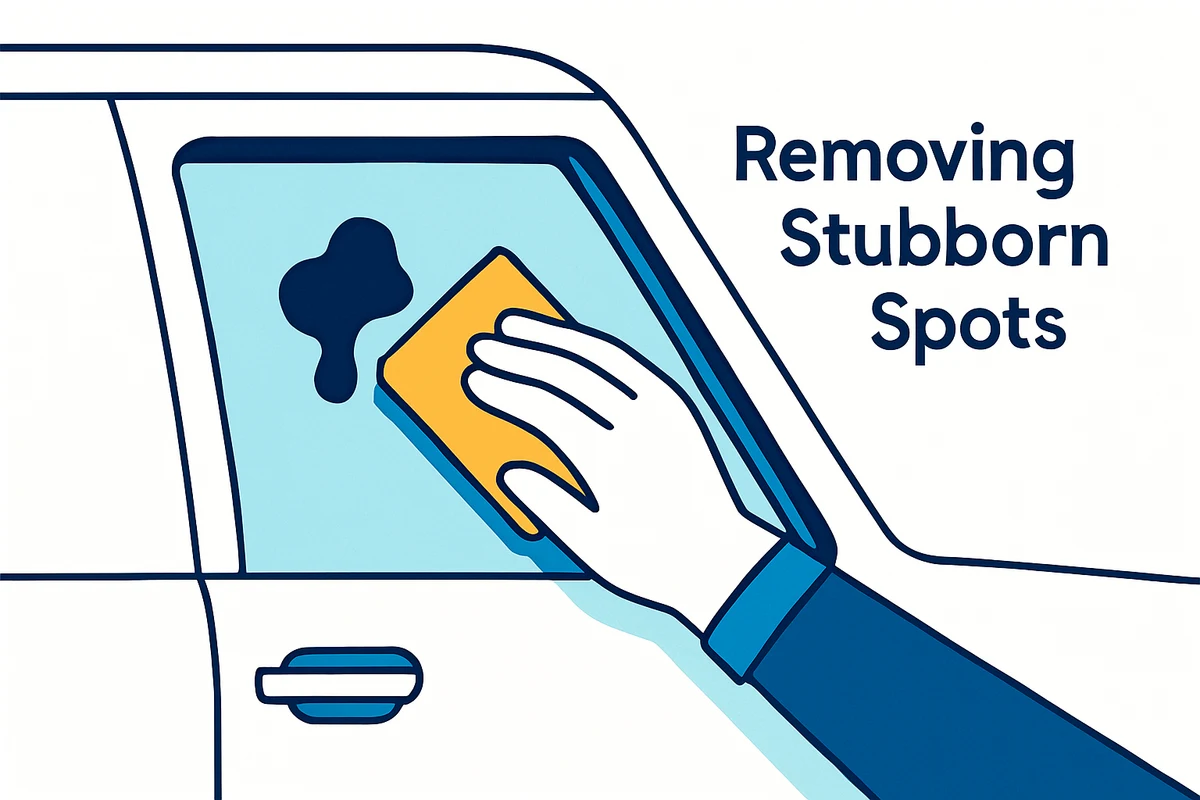
Sap deserves its own section because it behaves unlike ordinary grime and because the wrong tool can scratch your glass. All trees produce sap, but pine trees produce it in excess, and that sticky mix of fluid and sugars quickly hardens into a resin-like bond on the windshield, per. The reason your car can't deal with it on its own is that automotive washer fluid typically won't remove tree sap and the wipers may just smear it across the glass, per. So running the washers doesn't just fail here; it can spread the problem.
There are a few reliable approaches depending on how set the sap is, all from:
For large clumps that haven't fully hardened, ice can help. The sap cools faster than the glass does, and as it solidifies it becomes easier to lift; hold an ice cube over the spot for a few minutes, then scrape with a plastic ice scraper or plastic putty knife.
The critical warning here is to never use razor blades or other metal tools, which could damage the windshield.
For sticky sap, rubbing (isopropyl) alcohol is an effective solvent. Wear protective gloves, apply the alcohol to a microfiber or soft cloth rather than a towel or sponge, which are too harsh for windshield coatings, lay the moistened cloth over the sap for a few moments to soften it, then rub gently in a circular motion, re-moistening as needed, and follow up with glass cleaner. Distilled white vinegar works on a similar principle: spray it generously, let it sit three to five minutes, rub in a circular motion with a microfiber cloth, then wash with hot soapy water and dry.
Two prevention notes. Sap itself doesn't usually damage the glass, but left untreated it can reduce visibility, attract dirt, and cause wiper-blade streaking over time, per. And the simplest prevention is to park away from trees where you can, since applying a hydrophobic coating and parking in a garage or away from trees both make future contamination easier to clean off, per.
The fog problem: why it happens and how to clear it fast
Fog is the other reason people search for windshield help, and it's surrounded by half-remembered rules about which button to press. The physics is actually simple, and once you understand it the right response becomes obvious.
Windshields fog when moisture in the air condenses on the glass because of a temperature difference between the inside and outside of the car, per. More precisely, moisture in the air turns to condensation when it meets glass that is below a certain temperature, the dew point, and that condensation is the fog you see, per. The AA describes the same mechanism: windscreen fog is caused by temperature differences between the inside and outside of the car, which makes moisture form on the inside of the windscreen, per. The single most useful idea for clearing fog is this: the goal is always to bring the inside temperature closer to the outside temperature, per.
Crucially, fog can form on either side of the glass, and which side tells you what to do. Fog on the inside typically happens in colder weather, when warm, moist air inside the car meets the cold surface of the windshield. Fog on the outside usually happens in warm, humid weather, when you run the air conditioning, the AC brings the windshield's temperature down, and the warm, moist air outside condenses on the cold outer surface, per. That outside-fog scenario is the one that catches Gulf drivers off guard, and I'll return to it.
To clear fog on the inside (cold-weather fog), the fastest approach is counterintuitive but effective: turn the heat to maximum, because hot air can hold more moisture; turn the AC on, which pulls moisture from the air as it passes over the cooling coils; turn off the recirculation button so drier outside air is drawn in; and crack the windows for a couple of minutes if you can, to swap the humid inside air for drier outside air, per. If you'd rather stay warm, simply running the defroster to blow warm air across the windshield will evaporate the accumulating moisture, and you should still turn recirculation off, per.
To clear fog on the outside (warm, humid-weather fog), you do almost the opposite. Use the wipers to clear the condensation while you rebalance the temperature, warm the inside of the car by turning the AC down to its least-cool setting or off entirely, and leave recirculation off so the interior conditions can equalise with those outside, per. One warning matters here: don't try to wipe the glass with a cloth or fabric to clear this kind of fog, because it can leave streaks that impair your view in direct sunlight or against headlights, per. The wipers are the tool for outside fog, not a hand towel.
It helps to know what your car's controls actually do. The front defroster directs air at the windshield and typically uses both heat and air conditioning to remove moisture from the inside of the glass, while the rear defroster works differently, using electrical heating elements, fine wires embedded in the glass, to gradually warm it and clear condensation or ice, per. The AA notes the same features from the driver's side: look for the demister button that directs maximum airflow at the windscreen, and remember that the air conditioning isn't just for summer because it dries the air in the car and helps clear a misted screen, per.
The best long-term fix for fog is, surprisingly, clean glass. The dirtier your windshield and windows are, the easier it is for condensation to form on them, so keeping the glass clean actually makes it harder for fog to develop in the first place, per. If fog is a recurring problem, reducing the moisture inside the car helps too: a homemade dehumidifier such as moisture-absorbing cat litter in an old sock can draw moisture out of the cabin, and anti-fog sprays applied to the inside of the glass discourage condensation, per. This is the same connection AutoZone makes from the cleaning side: streaks and residue attract moisture and make glass more prone to fogging, so a properly cleaned, residue-free surface is your first defence, per.
Adapting all of this to Kuwait's climate
Almost every window-cleaning guide is written for a temperate climate with mild sun and cool, damp winters. A Gulf climate flips several of those assumptions, and a few adjustments make a real difference here. The following is practical advice grounded in local conditions rather than a set of measured claims, but where a source directly supports the underlying mechanism I've cited it.
Work with the sun, not against it. The heat isn't a minor factor here; it's the main thing standing between you and streak-free glass. Because direct sunlight and heat make the cleaner evaporate too quickly and leave streaks, per bothand, midday glass cleaning in a Kuwaiti summer is close to a guaranteed streak. Clean in the early morning or after sunset, and park in shade or a garage while you do it, which is simply the AutoZone advice about shade and early-or-late timing taken to its logical conclusion in a hot climate. When the glass is hot to the touch, use the trick of spraying cleaner onto the cloth rather than the glass, exactly asrecommends for warm windshields, so the product doesn't flash off before you can wipe it.
Respect the dust. Fine airborne dust is a fact of life here, and it changes how you should start. The instruction to remove surface dirt before cleaning, ideally by rinsing with sudsy water and letting the glass dry, per, isn't a nicety in a dusty environment; it's what stands between a clean wipe and a windshield full of fine scratches. Dragging a dry cloth across a dusty screen grinds that grit into the glass. Rinse first, always, and lean on lint-free microfiber so you're not adding your own debris, which is the scratching riskwarns about.
Expect fog on the outside, not the inside. In much of the world fog is a cold-morning, inside-the-glass problem. On a humid Gulf day the opposite happens: with the AC running hard against warm, muggy outside air, condensation forms on the outside of the windshield, which is precisely the warm-humid outside-fogging scenariodescribes. If your screen mists over while the cabin is cold and the outside is hot and humid, reach for the wipers and ease off the AC rather than wiping the inside, following the hot-weather defogging steps above.
Take glare seriously. Low sun and bright, dusty light make a hazy windshield genuinely dangerous, and the haze here has two sources working together: the road film and dust on the outside, and the off-gassing film on the inside that builds up regardless of whether anyone smokes, per. Because a dirty screen produces a hazy, glaring effect in strong sunlight, per, keeping both sides of the glass clean is a visibility measure, not a vanity one, in a place with this much sun.
Mind the tint. Tinted windows are common here for obvious reasons, which makes the ammonia rule more than a footnote. Stick to ammonia-free glass cleaner, which is safe for tint, per, and remember that ammonia can eventually cause tint to rip or fade, per. One habit of buying ammonia-free protects an expensive tint job over years.
A note on water spots: if you rinse the glass and let it air-dry in the sun, mineral-heavy tap water can leave spots behind. The fix is the discipline the method already asks for—drying the glass with a clean microfiber cloth rather than letting it evaporate—which is why every routine above ends with a buff.
How often, and when it's worth handing off
You don't need the full routine every week. It's reasonable to clean your car windows at least once a month, and more often if you drive in dusty or polluted conditions, per. In a dusty climate, "more often" is the operative half of that sentence, and the inside is easy to forget because the off-gassing film creeps back slowly, per; a quick interior wipe every couple of weeks stops the haze building to the point where it glares.
One last thing worth checking while your face is close to the glass: look for chips, cracks, or sealing issues, because a tiny chip can quickly grow into a large, dangerous crack, per. Clean glass makes small damage easy to spot early.
The bottom line
Done properly, glass is a short job with the right cloths, the right cleaner, and shade over your head. But the two things that make it work here—timing it around the heat and rinsing the dust off first—are the hardest to arrange when your car sits at the office all day under a blazing sun with no shade to be found. If you'd rather have it handled at your home or workplace, in the early morning or evening when the glass is cool and streak-free work is actually possible, that's exactly the kind of on-location detail work Master Wash is built for. Our mobile car wash service comes to you, so your glass gets cleaned at the right time and in the right conditions, without you having to chase the shade yourself.